

One of the oldest surviving paper documents found in Nepal, is a Lokta paper document of sacred Buddhist text, the Karanya Buha Sutra. Estimated to be between 1,000 and 1,900 years old, it is now housed in Nepal’s National Archives, Kathmandu and is testament to the strength and durability of Lokta paper. It is also a testament to how long Lokta has been a part of Nepal’s culture, with uses of Lokta paper being largely restricted to government documents and religious texts. And it continues to be such with it being used widely, from notebooks to prayer flags to boxes and lanterns. It is even used as incense wrapping as it is said to retain the potency of the incense.
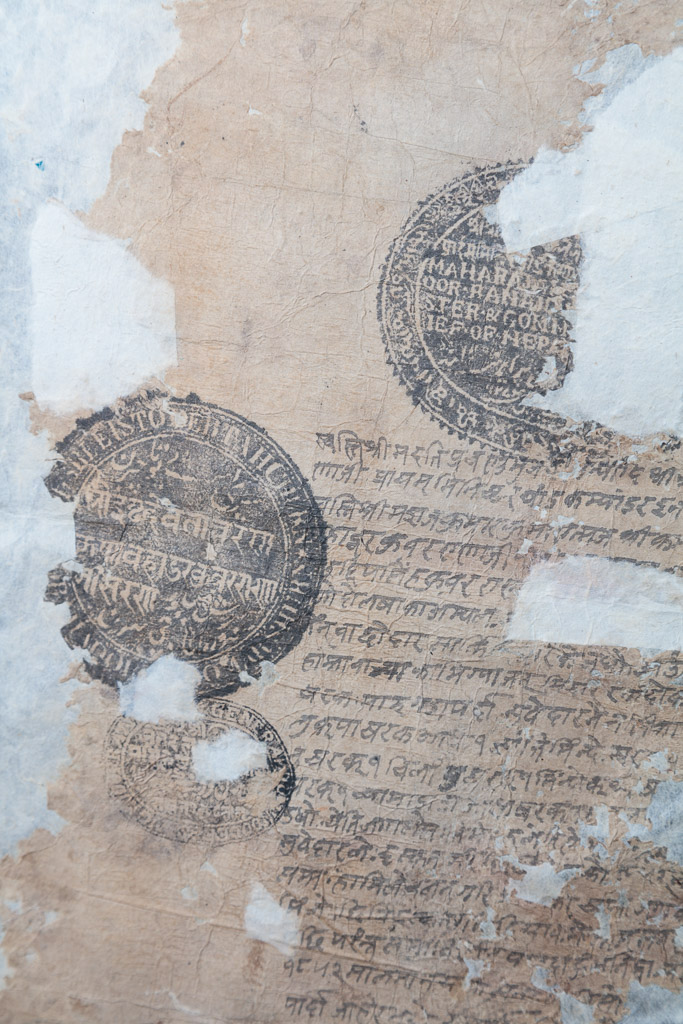
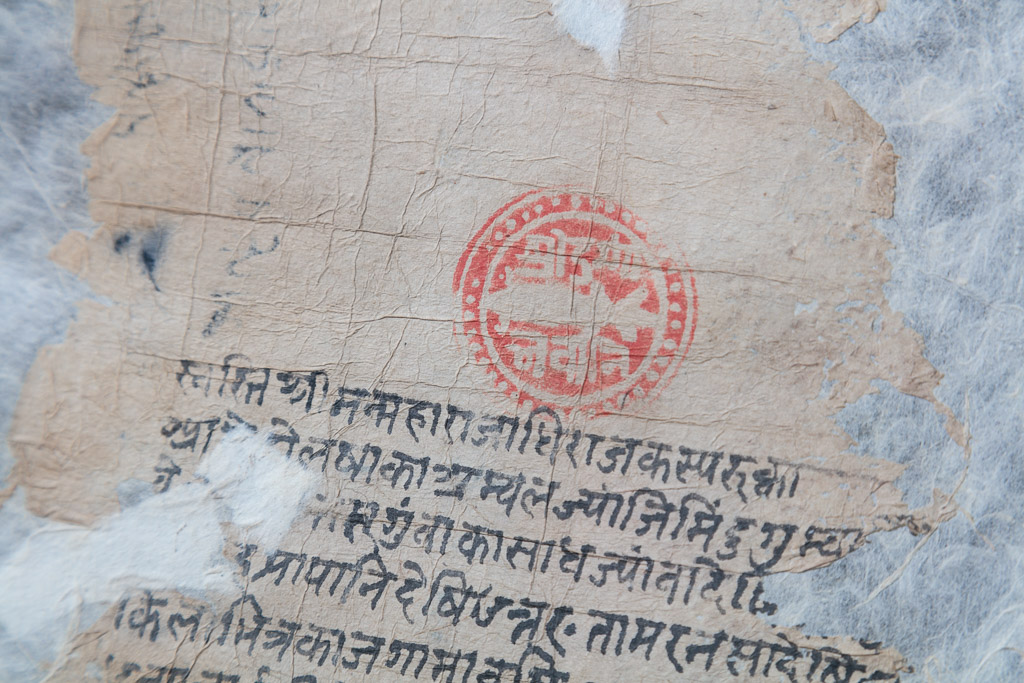
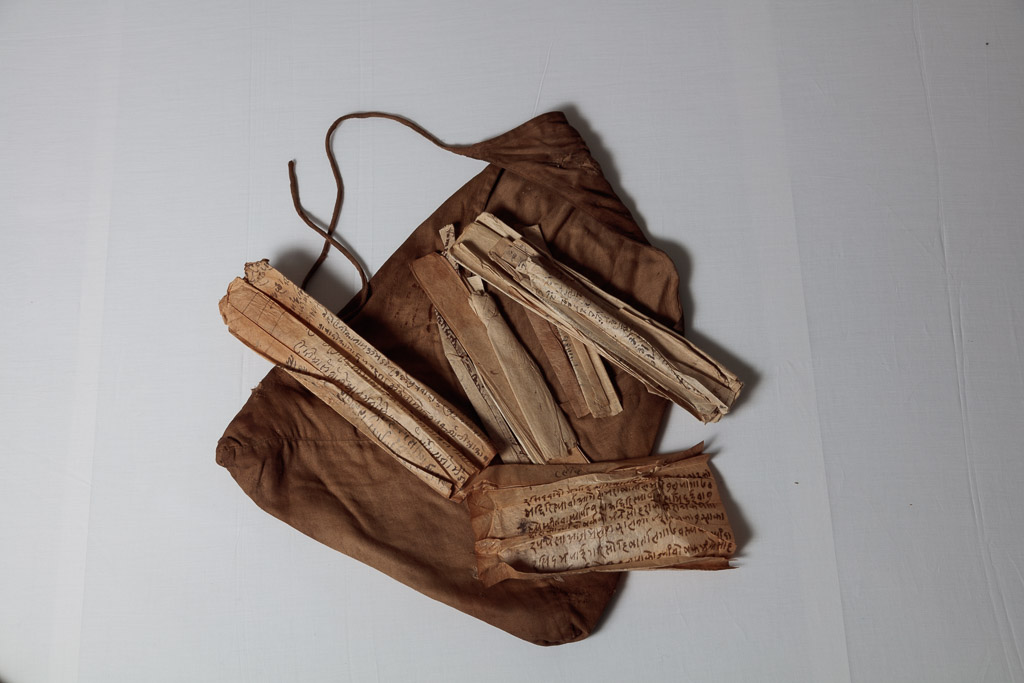
Made from the fibrous inner bark of the Lokta (and Argeli) plants, evergreen shrubs that grow only in mid- to high-elevation areas of the southern slopes of Nepal’s Himalayan forests, Lokta Paper is very durable as it is resistance to tearing, humidity and insects.
And while different things have been changed in the process of making the paper to make it durable or smooth or make the overall quality better or to make the overall process quicker and more efficient, the core of the process has remained the same.
- It goes as following:
- Preparing Raw Lokta Bark: The raw Lokta bark is soaked in water overnight and cleaned to remove the dirt and spots.
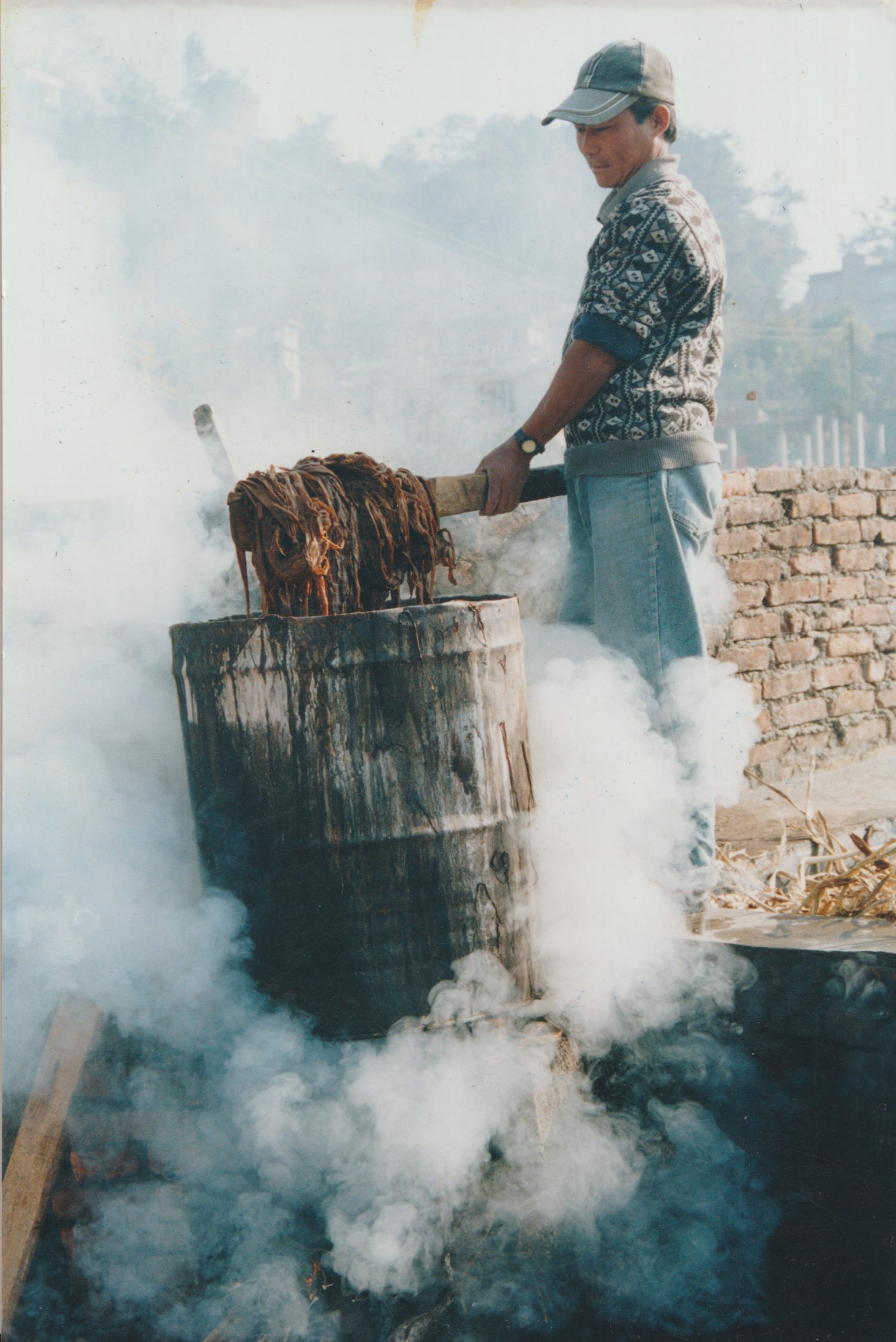
- Cooking the Lokta Bark: The bark is then cooked in water for several hours to soften it.
- Cleaning the Cooked Bark: The cooked bark is then cleaned again. It might also be bleached.
- Beating & Pulp Preparation: The clean cooked Lokta bark is then cut and beaten into pulp
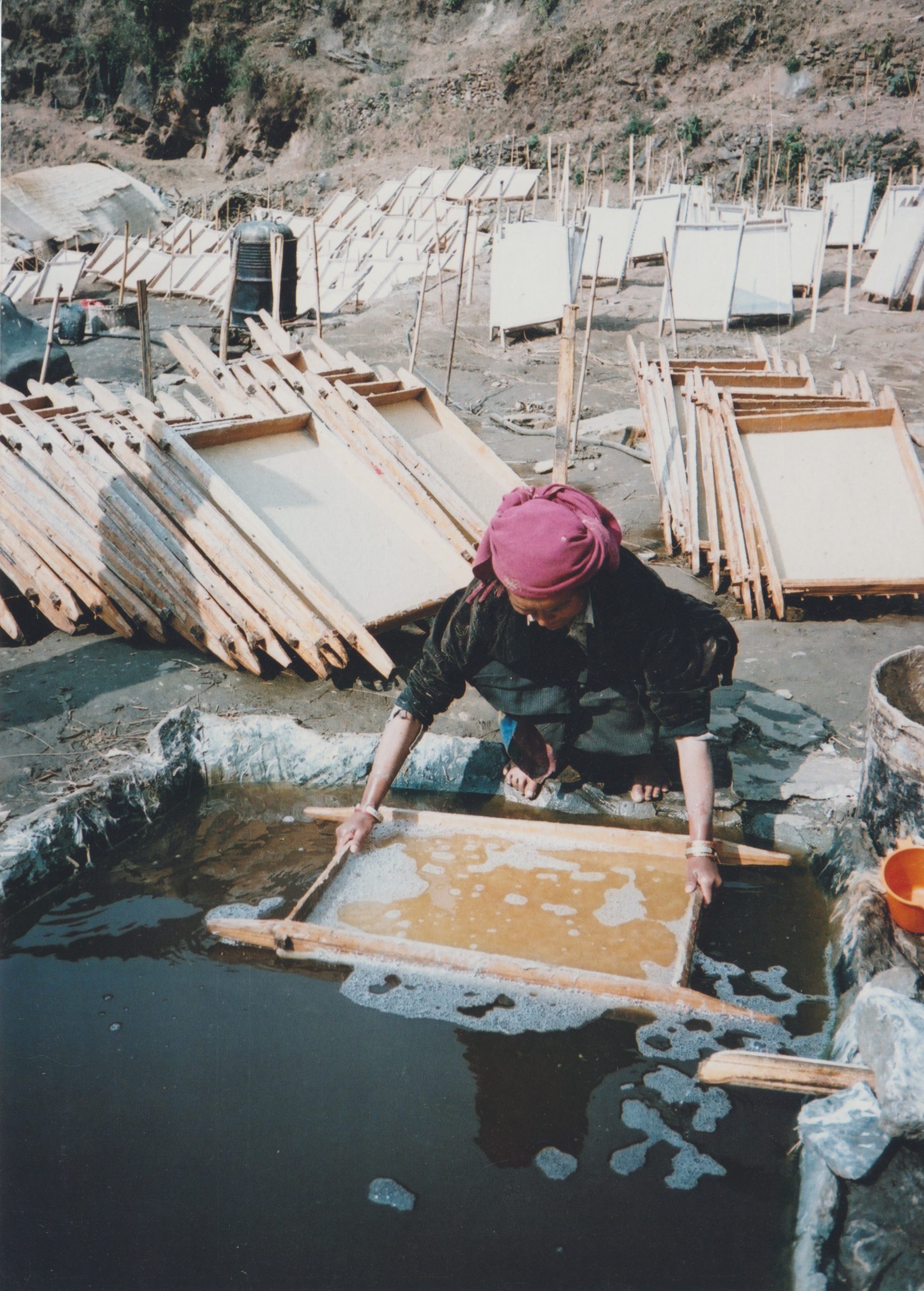
- Using Frames to Create Sheets: The pulp is mixed with water and a frame is used to create sheets of paper
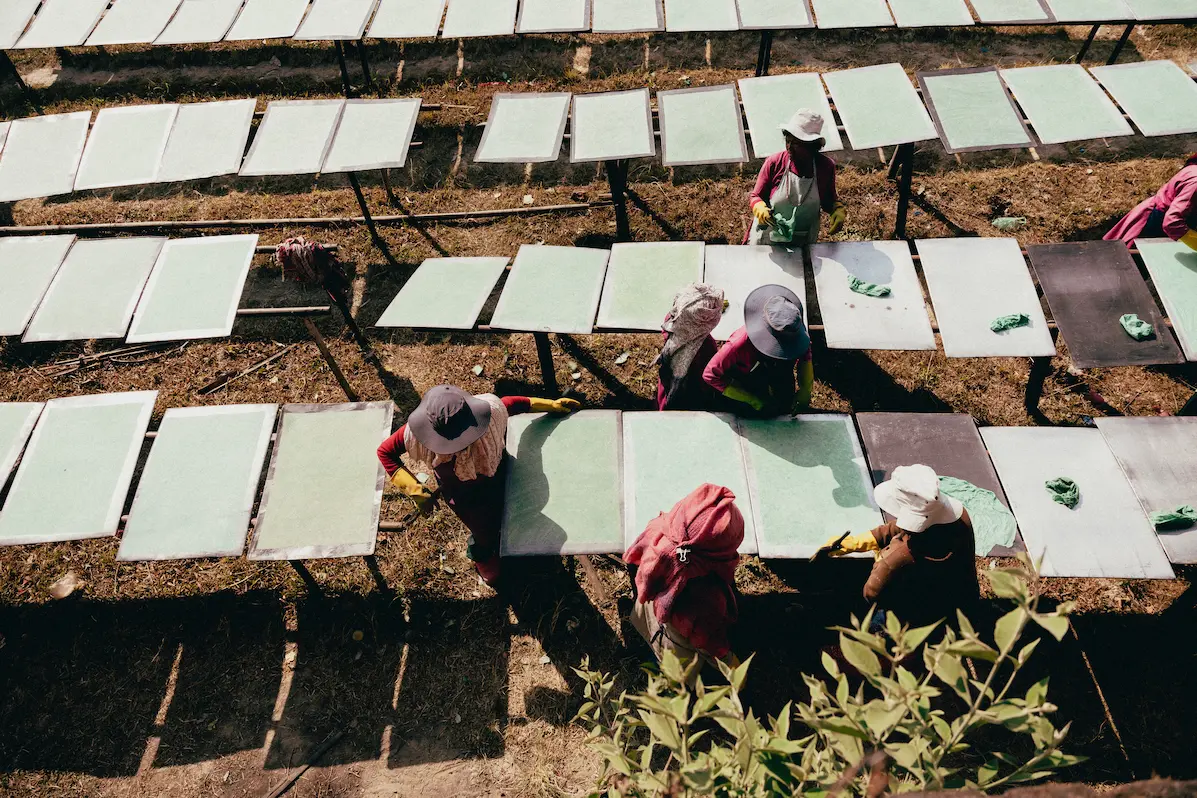
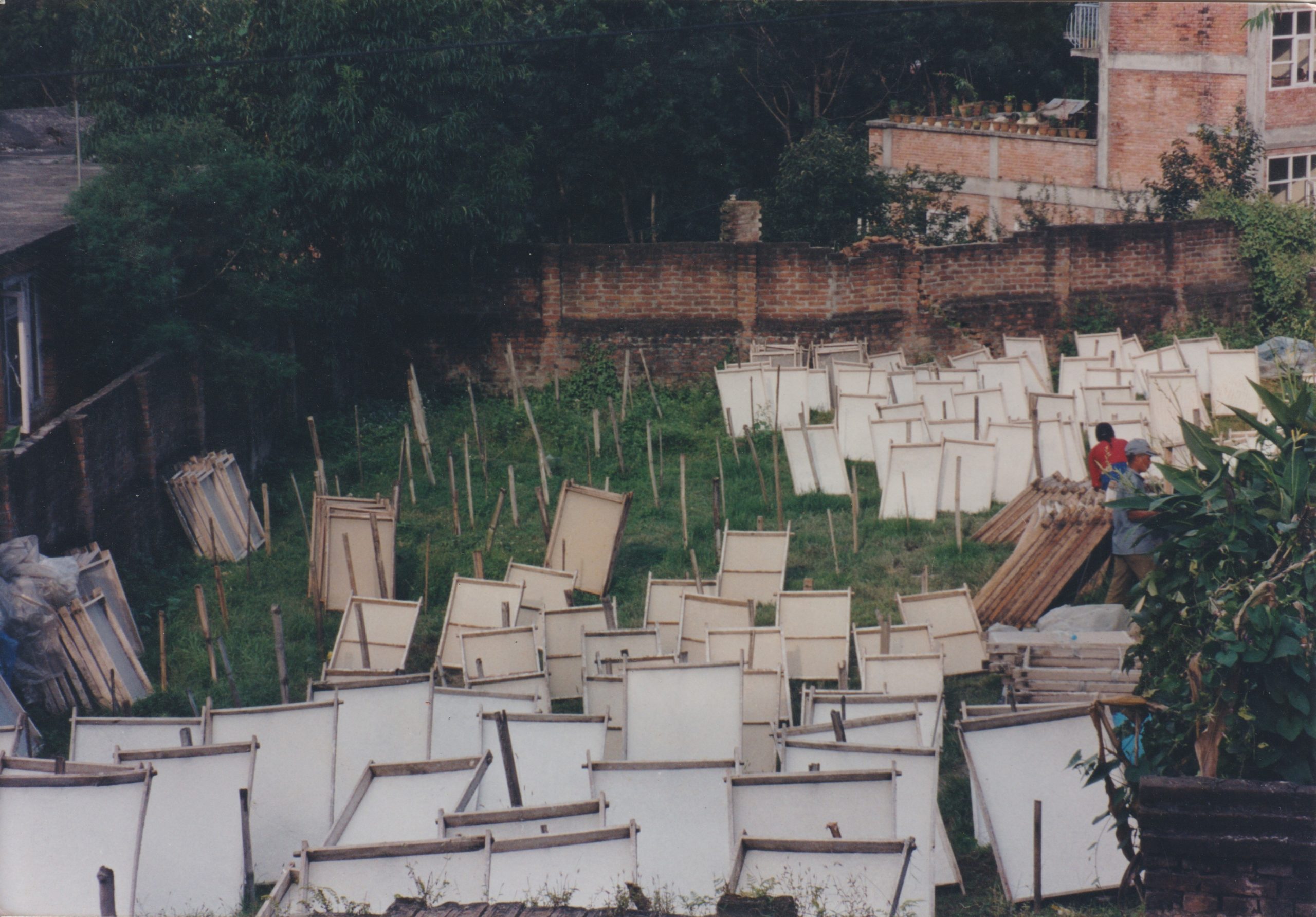
- Drying: The sheets are then dried using the sun.
After drying, it might be dyed or even when creating the sheets, flowers and seeds may be added to create a unique design. The finished paper is graded and can be used to make various products. Its durability makes it very versatile and easy to work with. Any defective products or waste from the products can be recycled to make more paper making it sustainable and zero waste as well.