

A Paper With a Story
Walk into a boutique stationery shop in Brooklyn, a craft studio in Portland, or a bookbinding workshop in Austin, and there is a good chance you will find a stack of paper that looks and feels unlike anything else on the shelf. The sheets are soft yet strong. Tiny natural fibres are visible on the surface. The edges are gently irregular. Many of them carry hand-printed flowers, batik patterns or rich, earthy colours. This is handmade lokta paper from Nepal, and this is why American people prefer lokta paper, it is steadily becoming a favourite among American designers, artists, writers, gift makers, packaging brands and eco-conscious shoppers.
So why do people in the USA prefer lokta paper from Nepal over ordinary machine-made paper? The short answer is that lokta paper offers something factory paper cannot: a real connection between material, maker and place. It is made from the bark of Himalayan shrubs, shaped by hand using methods passed down through generations, and valued for qualities such as durability, texture and individuality.
In this guide, we explain what lokta paper is, how it is made, how to recognise authentic sheets, why it can last for generations, and how THP Nepal is helping bring this heritage craft to customers across the United States.
Lokta Paper?
Lokta paper is a traditional handmade paper from Nepal, produced from the inner bark of Himalayan shrubs of the Daphne family, most commonly Daphne bholua and Daphne papyracea. In Nepal these plants are called lokta. They grow wild on steep mountain slopes, generally at cool, high altitudes, in the middle hills and higher Himalayan regions.
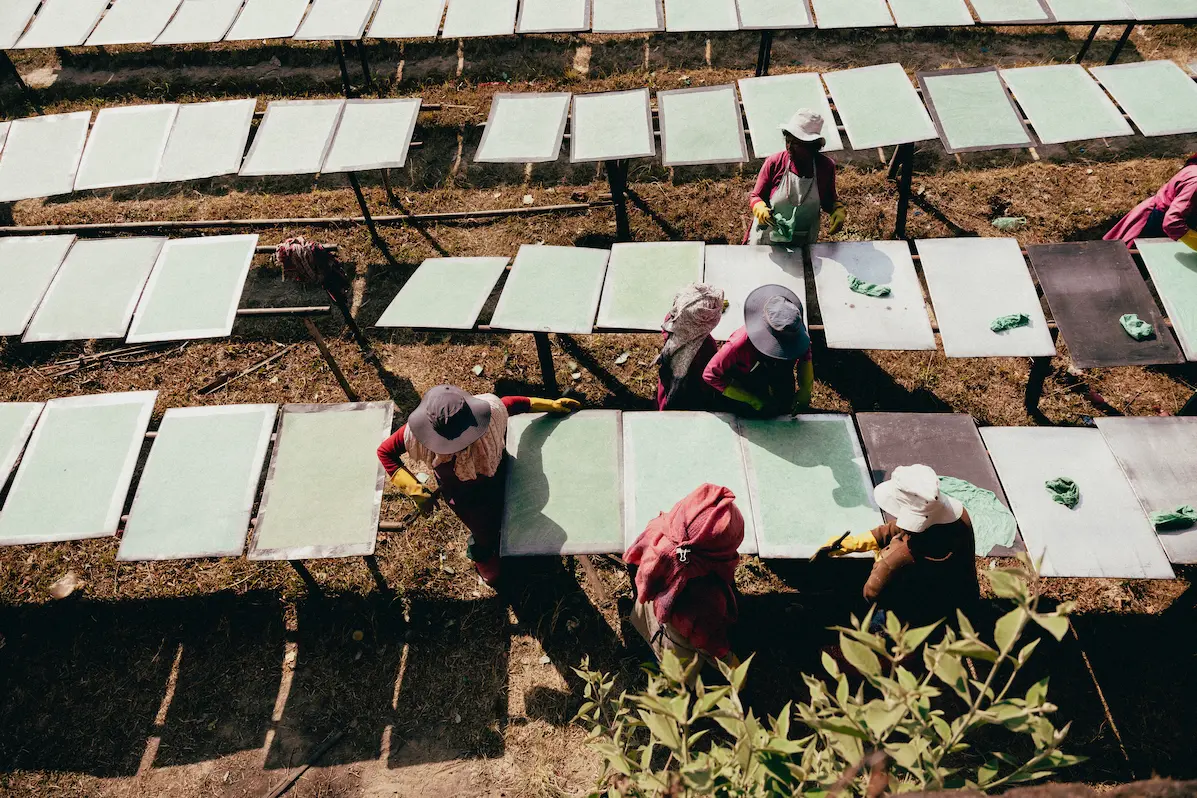
The paper is often called Nepali paper, Himalayan paper or Nepalese handmade paper. Unlike most commercial paper, it is not made from wood pulp cut from managed forests, and it is not produced on a high-speed paper machine. Each sheet is formed by hand, dried in the open air, and finished by skilled artisans.
Papermaking in Nepal has a long history. For centuries, lokta paper has been used for religious texts, government records, royal decrees, legal documents, and the books that monasteries and families preserved for generations. That heritage is a big part of why the paper carries so much trust today.
Also read more on: Longest Paper Scroll
The Natural Origin of Lokta Paper
Made From Himalayan Bark
The main raw material is the inner bark of the lokta plant. The bark contains long, strong natural fibres, which is what gives the finished paper its resilience. Because the fibres are long and interlock well, the paper resists tearing far better than many everyday papers.
A Renewable Resource
Lokta is a shrub, not a tree that must be felled. When harvested responsibly, by cutting the stems above ground level and leaving the root system and part of the plant in place, the shrub regenerates and can be harvested again after a number of years. Community forest user groups in Nepal commonly manage harvesting in rotations so that plants have time to recover. Responsible management matters here: when harvesting is controlled, lokta can be a renewable resource, and the communities who depend on it have a strong reason to protect it.
Rooted in Place
Because the plant grows in the Himalayan hills, lokta paper carries a genuine sense of origin. When customers buy it, they are not buying a generic commodity. They are buying a product shaped by a specific landscape, climate and culture.
Authentic Lokta Paper: How to Recognise the Real Thing
As lokta paper has grown in popularity, so have imitations. Some products are labelled “lokta” or “Nepalese-style” but are actually machine-made or contain very little real lokta fibre. Here is how buyers can judge authenticity.
Look closely at the surface. Genuine lokta paper shows tiny natural fibres, slight variations in thickness, and an organic, non-uniform texture. A perfectly flat, perfectly even sheet with a printed “handmade look” should raise questions.
Check the edges. Handmade sheets usually have soft, slightly uneven or deckled edges, rather than the razor-straight machine-cut look of factory paper.
Hold it up to the light. Real lokta shows a cloud-like, fibrous formation, with denser and lighter areas. Machine paper tends to look uniform.
Feel the strength. Try to tear a small corner. Authentic lokta is noticeably resistant because the fibres are long and interlocking.
Ask about origin. A trustworthy supplier can tell you where the paper was made, what it is made from, and how it is produced. Clear answers are a good sign.
Work with a known supplier. Established Nepali producers and exporters who work directly with papermaking communities can document their sourcing and process. This is one of the strongest signs of authenticity, and it is why many American buyers prefer to work with direct sources such as THP Nepal.
Texture and Appearance: Why It Feels Different
Texture is often the very first thing people notice about lokta paper. Because it is made from bark fibre and formed by hand, the sheet has a tactile, organic surface that is difficult to imitate.
Some of the qualities customers love include:
- Visible natural fibres running through the sheet
- A soft but sturdy hand feel
- Gentle variations in thickness and density
- A natural warmth in colour, with earthy cream, ivory and brown tones
- A matte, non-glossy finish that suits writing, printing and craft work
In a world where so much is smooth, glossy and identical, a sheet with character stands out. Designers and brands in the USA increasingly choose lokta paper because it communicates authenticity and craftsmanship before a single word is written on it.
Durability: Paper Made to Last
Strong Natural Fibres
Lokta fibres are long and strong. When they are beaten into pulp and formed into a sheet, they interlock tightly, giving the paper excellent tear resistance. This is why lokta paper is popular for book covers, bookbinding, envelopes, packaging and any use where regular paper might crumple or rip.
A Long Record of Preservation
Lokta paper has been used for centuries to record manuscripts, religious texts and official documents in Nepal and neighbouring Himalayan regions. Many historic documents written on traditional paper like this have survived for a very long time, which is one reason the material has earned a reputation for longevity. It is fair to say that well-made lokta paper, kept in suitable conditions, has the potential to last for generations.
Of course, longevity depends on how the paper is stored. Like any paper, it lasts longest when it is kept away from direct sunlight, extreme humidity and standing water.
Natural Insect Resistance
Lokta plants contain natural compounds that make the fibre unappealing to many paper-eating insects. As a result, lokta paper has traditionally been valued for resisting damage that can affect other papers in storage. This is an important reason it was trusted for records and manuscripts in a region with a humid, insect-prone climate. While no paper is completely immune, lokta’s natural resistance is a real advantage.
Low-Acid Character
Traditional lokta papermaking does not rely on the harsh chemical bleaching and acid-based processes common in industrial paper. Papers made with gentle, natural processing tend to age better and are less likely to turn brittle and yellow quickly, which supports the paper’s reputation as a long-lasting material for books, certificates, journals and art.
Sustainability: An Eco-Friendly Alternative to Wood-Pulp Paper
American consumers are increasingly asking where products come from and what impact they have. Lokta paper answers many of those questions well.
Tree-free material. Lokta paper is made from a shrub’s bark, not from trees cut for pulp.
Renewable harvesting. When managed responsibly, the plants regrow after harvesting.
Low-energy production. Hand processing and sun drying use far less industrial energy than large paper mills.
Fewer harsh chemicals. Traditional processing relies on simpler, gentler methods, compared with heavily bleached industrial paper.
Supports forest protection. When local communities earn income from lokta, they have a financial reason to care for the forests where it grows.
To be transparent, no product is perfectly impact-free, and sustainability depends on good harvesting practices and responsible sourcing. That is why choosing suppliers who work with community-managed harvesting and who can explain their sourcing is so important.
Artistic Versatility and Customisable Designs
One of the biggest reasons lokta paper has taken off with creative buyers is how adaptable it is. It can be produced in many forms:
- Plain natural sheets in cream, ivory and earthy tones
- Dyed paper in a wide range of vibrant colours
- Flower and leaf paper with real pressed botanicals embedded in the sheet
- Batik prints made with traditional wax-resist techniques
- Block-printed and screen-printed designs featuring mandalas, Himalayan motifs, florals and geometric patterns
- Gold and metallic finishes for invitations and gift wrap
- Custom sizes, weights and patterns for brands and wholesale orders
This flexibility means one material can serve many industries. Stationery makers use it for notebooks, journals and greeting cards. Packaging brands use it for gift wrap, boxes and bags. Wedding planners choose it for invitations and place cards. Bookbinders rely on it for covers and endpapers. Artists use it for printmaking, collage, calligraphy and mixed-media work.
Cultural Heritage and Supporting Local Artisans
Buying lokta paper is not just a design choice. It is also a way to support a living tradition.
Preserving a Craft
Nepal’s papermaking tradition has been passed down through families and communities for centuries. Without continuing demand, craft skills like this can fade. Every purchase helps keep the knowledge alive.
Creating Rural Livelihoods
Lokta harvesting and papermaking provide income to people in rural and hill communities, where job opportunities can be limited. Harvesters, bark processors, papermakers, dyers, printers and packers all benefit from a healthy lokta paper economy. For many families, this work supports education, healthcare and stability.
Fair and Transparent Trade
Many American buyers today want to know that the people behind a product are treated fairly. Working with ethical suppliers who deal directly with artisan groups helps make sure that more of the value stays within Nepali communities.
Why Lokta Paper Is Valued in the USA
There is no single reason American buyers have embraced Nepalese paper. It is a combination of factors that line up with current consumer values.
1. The Handmade Movement
American shoppers increasingly prefer handmade, small-batch and artisan goods over mass-produced items. Lokta paper fits perfectly: each sheet is distinct, and the story behind it is easy to tell.
2. Demand for Sustainable Materials
Brands and consumers across the USA are looking for alternatives to wood-pulp and plastic-based materials. Tree-free, renewable paper from a responsibly managed plant is a natural fit.
3. Premium Gifting and Packaging
Lokta paper looks and feels premium. Gift shops, florists, boutique brands and subscription box companies use it to make products feel special at the moment of unboxing.
4. A Growing Craft and Journaling Culture
Bullet journaling, scrapbooking, calligraphy, bookbinding and printmaking have all grown as hobbies. These communities care deeply about paper quality, and many of them have discovered lokta as a favourite material.
5. Wedding and Event Stationery
Couples and event planners want invitations that feel personal and memorable. Textured, handcrafted paper delivers that effect far better than standard card stock.
6. Storytelling Value
American consumers connect with brands that have a story. “Made by hand from Himalayan bark in Nepal” is a story that sells itself, and it is true.
7. Trust in Quality
Once a customer tries lokta paper, the difference in strength and character is easy to see. Word of mouth, repeat orders and professional recommendations have all helped build trust.
Proof Points: 15 Reasons to Choose Lokta Paper
If you are comparing lokta paper to other options, these are the qualities that matter most.
- Natural raw material: Made from the bark of Himalayan lokta plants native to Nepal.
- Renewable resource: Lokta shrubs regenerate after harvesting when responsibly managed.
- Handmade production: Crafted using traditional Nepalese papermaking techniques.
- Exceptional durability: Strong natural fibres provide good tear resistance.
- Unique texture: Each sheet has distinctive natural fibres and organic patterns.
- Long-lasting quality: Traditionally used for manuscripts and historical documents.
- Natural insect resistance: Naturally resistant to many insect-related forms of damage.
- Eco-friendly alternative: Offers an alternative to conventional wood-pulp paper.
- Artistic versatility: Available in various colours, textures, prints and finishes.
- Customisable designs: Suitable for specialised patterns, flower prints, batik and decorative finishes.
- Cultural heritage: Preserves Nepal’s traditional papermaking craftsmanship.
- Supports local artisans: Creates livelihood opportunities for rural Nepalese communities.
- Wide applications: Ideal for stationery, packaging, bookbinding, crafts, invitations and decorative products.
- Distinctive appearance: Every handmade sheet carries subtle variations, making it unique.
- Premium craft value: Combines natural materials, traditional skills and artistic character.
For businesses that want more than a generic commodity, these characteristics can become a major product differentiator.
How THP Nepal Is Changing the Market
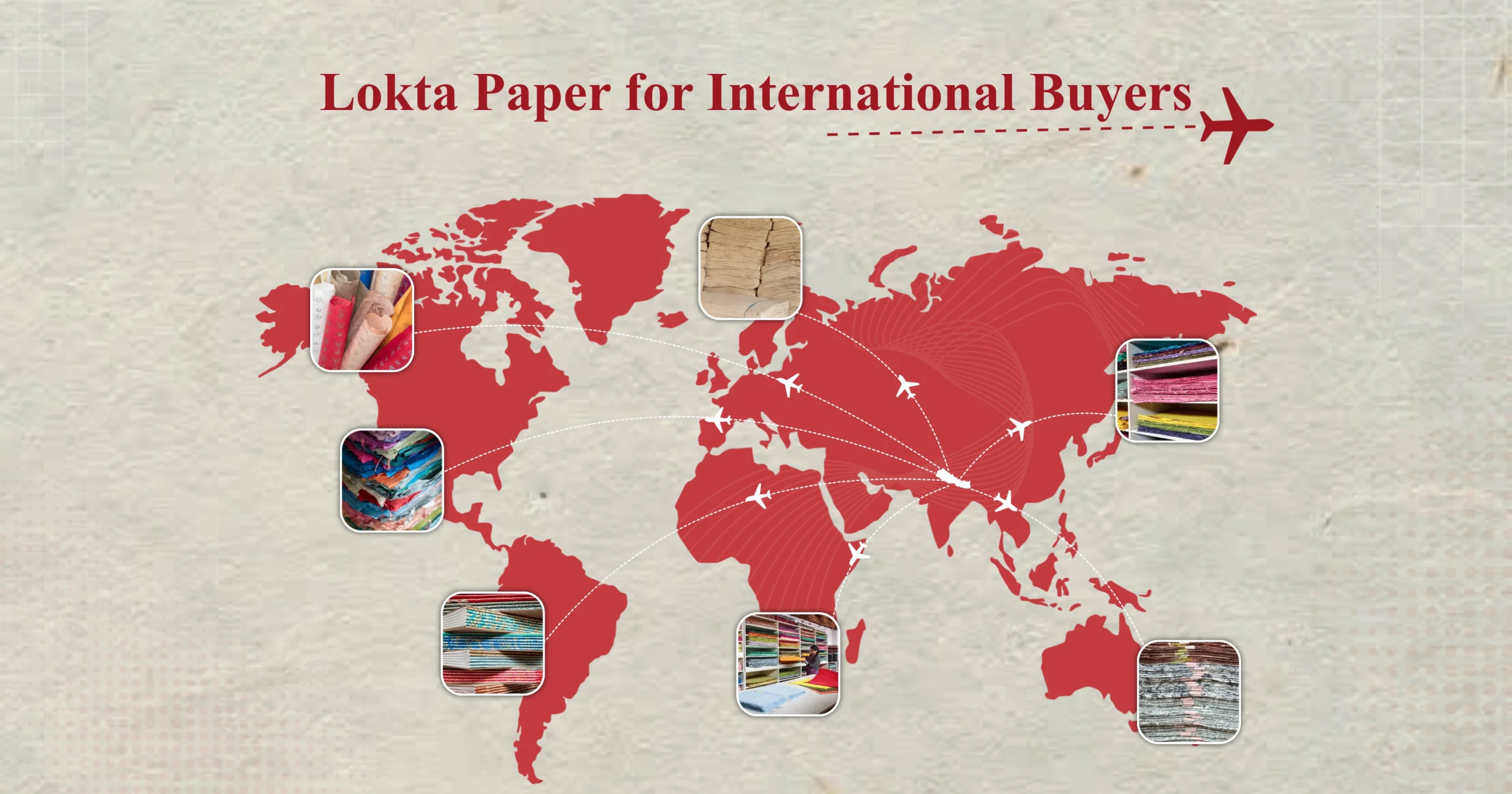
Nepal’s lokta paper industry has existed for generations, but for a long time it served mostly local and regional needs. What is changing now is access. Exporters and manufacturers such as THP Nepal are connecting Himalayan papermaking with international buyers, and the USA is one of the most important destinations for that growth.
Bringing Authentic Nepalese Paper to American Buyers
By working directly with Nepali papermakers and finishing workshops, THP Nepal offers customers authentic handmade paper without the layers of middlemen that can dilute quality and transparency. Buyers receive paper that reflects genuine Nepalese craftsmanship.
A Wide Range of Unique Products
From plain lokta sheets and floral papers to batik prints, wrapping paper, notebooks, journals, cards, gift boxes and decorative items, a diverse catalogue lets American retailers, designers and wholesalers find exactly what suits their market. Custom orders allow brands to create signature patterns and finishes.
Quality That Builds Trust
Trust is earned through consistency. Careful sorting, inspection and packaging help make sure that what customers receive matches what they expected. For businesses, reliable quality means fewer returns, happier customers and stronger repeat sales.
Supporting Artisans While Growing Globally
Every export order supports Nepali artisans and their communities. As international demand grows, so does the opportunity for rural families to earn a stable income from a craft they have inherited. This is the kind of growth that benefits everyone: the maker, the seller and the buyer.
A Growing Presence in the US Market
American interest in handmade, sustainable and culturally rich products continues to rise, and Nepali handmade paper is increasingly visible in boutiques, craft stores, online marketplaces, wedding studios and packaging brands. THP Nepal is part of this movement, helping lokta paper move from a regional specialty to a recognised choice in the American market. The goal is not to replace everyday paper, but to offer a premium, meaningful alternative for people who value craft and character.
How to Choose the Right Lokta Paper
Whether you are a retailer, a stationery brand or an individual maker, use this checklist when buying.
Define your purpose. Decide whether you need paper for writing, printing, packaging, bookbinding, art, or decoration. Different uses call for different weights and finishes.
Check weight and thickness. Lighter sheets suit gift wrap and lamp shades, while heavier sheets work better for covers, cards and invitations.
Test printing and writing. Lokta is usually friendly to pens, pencils, ink and block printing, but surface texture can affect fine lines. Request samples before large orders.
Ask about colourfastness. If you need vibrant colour, confirm that dyes are stable and suitable for your use.
Confirm sourcing. Ask where the lokta comes from and whether harvesting is community-managed.
Request samples. A good supplier will gladly send sample sheets so you can feel the quality for yourself.
Consider customization. If you want exclusive patterns or sizes for your brand, choose a supplier that offers custom work.
Caring for Lokta Paper
A few simple habits will help your lokta paper last as long as possible.
- Store flat, in a cool, dry place
- Keep away from direct sunlight to protect colours
- Avoid prolonged contact with water and high humidity
- Use acid-free tissue or folders for artwork and keepsakes
- Handle with clean, dry hands
Why Lokta Paper From Nepal Is Worth Choosing
Americans prefer lokta paper from Nepal because it offers qualities that are increasingly rare: real craftsmanship, natural materials, lasting strength, and a story you can trust. Each sheet comes from a Himalayan shrub, is shaped by skilled hands, and carries the subtle variations that make handmade paper beautiful. It is durable, versatile and kinder to the environment than conventional wood-pulp paper, and it supports the artisans and communities who keep a centuries-old tradition alive.
As demand grows across stationery, packaging, bookbinding, wedding design and art, suppliers like THP Nepal are helping bring authentic Nepalese paper to the USA, with the variety, quality and transparency that buyers can rely on.
If you are looking for paper that is more than just a surface to write on, paper with heritage, texture and character, lokta is a choice you can feel good about.
Ready to experience authentic handmade lokta paper from Nepal? Contact THP Nepal today to request samples, explore our collection, or discuss custom designs for your brand.
Choose
→
Select paper type, size & quantity.
Inquire
→
Send us your requirements.
Get Quote
→
Get pricing and order details.
Confirm
→
Approve and confirm your order.
Ship
→
We prepare and ship your order.